
Sim rig setup: seat type & mounting
Before the exact angles for your class matter, two things about your seat decide which of them you can even adjust: what kind of seat it is, and how it is mounted. This page explains both — and how to photograph your rig so the measurement is accurate.
Seat type: recliner or bucket
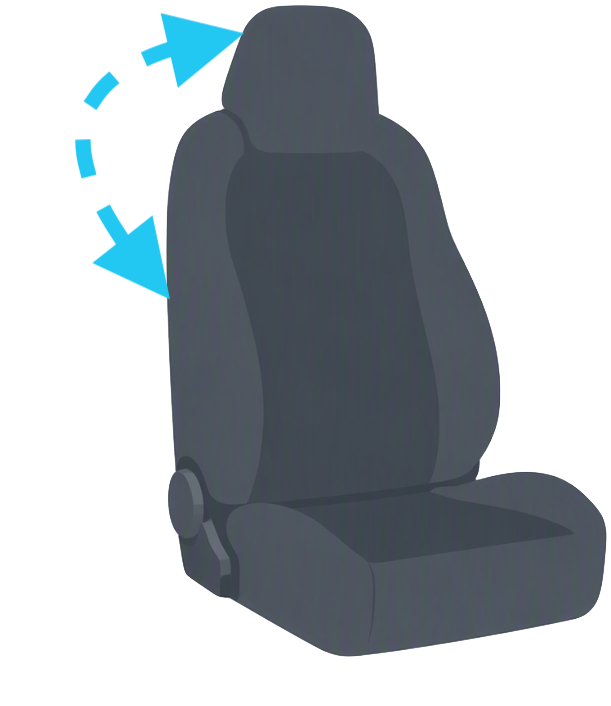
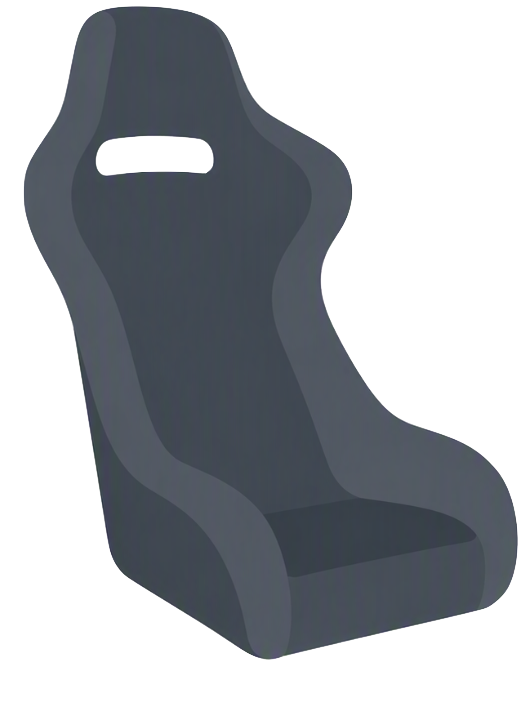
A recliner has an adjustable backrest — you can change your torso lean directly. A bucket is a rigid shell with a fixed backrest angle; on a bucket, torso lean can only be changed by tilting the whole seat.
Seat mounting: angle-adjustable or fixed
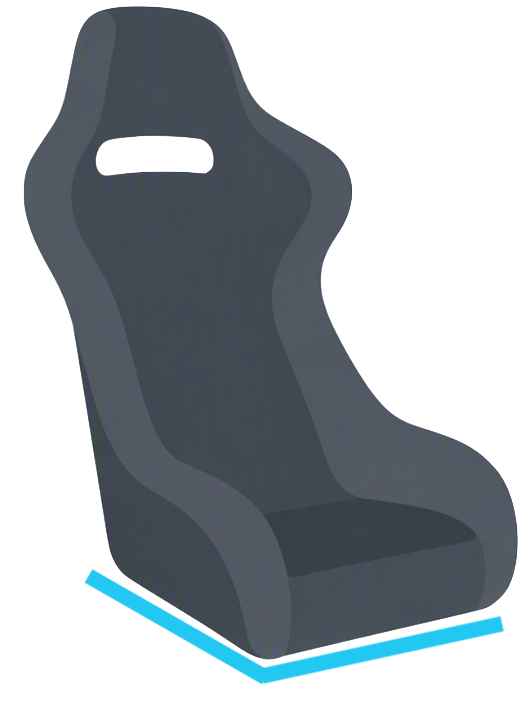
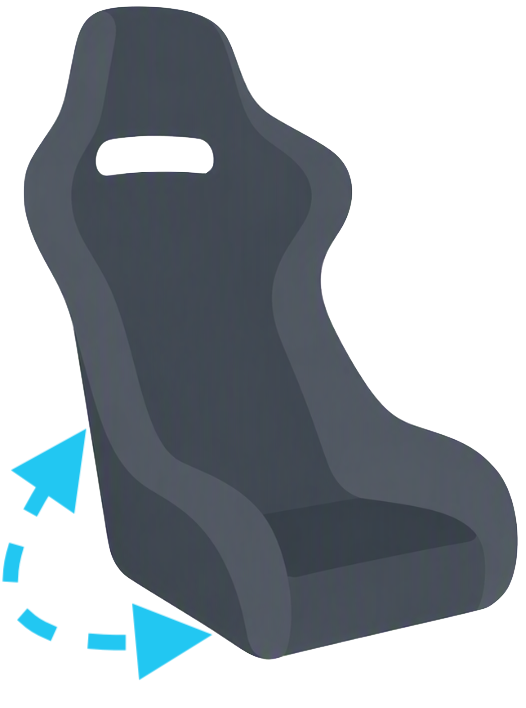
An angle-adjustable mount lets you tilt the whole seat, which changes torso lean and knee height together. A seat fixed horizontally has neither adjustment — on a fixed bucket, torso lean cannot be set at all, and the only fix for a reclined class is to upgrade to an angle-adjustable mount.
Which adjustment changes which angle
| Adjustment | Affects | Present with |
|---|---|---|
| Backrest | Torso lean | Recliner seat |
| Mounting angle | Torso lean and knee height at once | Angle-adjustable mount |
| Seat distance | Reach to pedals and wheel (knee & elbow) | Rig-dependent |
| Pedal height | Hip angle (via knee height) | Rig-dependent |
| Pedal distance | Knee angle | Rig-dependent |
| Wheel height | Wheel height / shoulder angle | Rig-dependent |
| Wheel angle | Elbow angle and hand posture | Rig-dependent |
Set them in this order: first the seat (mounting angle, backrest, seat distance), then the pedals (height and distance), then the wheel (height and angle) — otherwise you adjust the same angle twice. On most rigs the hip angle is reached through the pedal height, so it stays adjustable in any combination.
General tips
First and foremost it has to feel comfortable — comfortable enough to drive long stints without pain. The tips and target values here aren't an end in themselves; they give you a good orientation and a head start.
- Wrist test (reach) — back against the seat, stretch your arm straight ahead: your wrist should rest on top of the wheel rim. Gripping at 9 and 3 then gives you the slightly bent elbow by itself.
- Shoulders on the seat — your shoulders stay against the backrest when you grip the wheel. If you have to pull them forward, you are sitting too far away.
- A little bend in the knee — with the brake fully pressed the knee stays slightly bent; a fully straight leg costs force and feel at the pedal.
- Wheel height — the top of the wheel sits roughly at shoulder height (Road, GT, Rally) or toward eye level (Formula, Prototype).
- Head balanced — your head rests relaxed over your shoulders and your eyes look straight ahead; not tilted back, not pushed forward.
- Pedal angle — especially in racing classes, the pedals should be angled toward you to maintain a relaxed foot position while going full throttle.
- Shaft extension — if your knees are hitting the wheelbase, a shaft extension can help by increasing the distance between your knees and the wheelbase.
How to photograph your rig
SimPosture measures your angles from one side-on photo. Place the camera to the side of your rig, capture your whole body from head to foot, keep the camera level rather than tilted, and take the shot in your normal seating position with your hands at 9 and 3 and one pedal fully pressed. That is all it needs to rate your position and tell you what to change.